

Free outdoor activities for kids
2025-02-08 • No comments • • Rattray
We are exploring the possibility of this funding to try and offer children from Rattray some fun activities. These activities will offer far more than fun, opportunities to learn or improve on skills, fitness, be part of a team, work on respect, nature, environment, self-confidence all at their own pace and learning ability.
At Mantalk we have a lot of men coming through our doors with issues that stem from childhood. We are big believers that the more positivity you can give to children can help them them right throughout life. Whilst we are unable to accommodate them at our group we are always looking at ways where we can offer some help and support.
We talk about our own childhood experiences and when things like activities or sport camps came up many of us missed out because our parents couldn’t afford to pay the costs. From our own experiences during childhood we wouldn’t wish that feeling on any child but due to the cost of living we know there will be many children in similar positions. If we are successful then these spaces will be offered to any child in Rattray for free on a variety of activity days during the school holidays including paintball, cycling, football, rugby and archery. We will partner with Albert Douglas of AK Paintball, Piotr Gudan of Outdoor explore and Cally Gordons activity camps to deliver these activities to the children of Rattray.
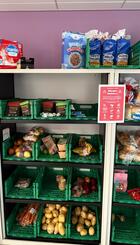
The Community Fridge Project
2025-02-04 • 1 comment • • Central and North Perth
Letham4All SCIO operates the Community Fridge Project in the Letham, Muirton, and Moncreiffe areas of Perth to prevent good food from going to waste and help people stretch their budgets. The Community Fridges operate as a universal service, meaning they are open to anyone in the community, with no referral being required and they can used as many times as people want to use them.
The Community Fridge Project collects surplus food every evening from local supermarkets, which is then sorted and distributed between the different sites. Some surplus food is blast-frozen and is available from freezers in each of the areas. All of this surplus food is freely given away, as well as frozen meals prepared by another local charity made from surplus food. In each of the Community Fridge, there is a range of tinned and dried goods which people can purchase at 20p an item, up to a maximum spend of £2.00 (10 items). The Letham Community Fridge is open 7 days a week, with Muirton and Moncrieffe Fridges being open 4 days throughout the week.
The Community Fridge Project is supported by around 60 volunteers who take on a variety of roles across the whole operation of the project. We know that around 400 people from over 1000 registered users, access the project every week and that throughout the ongoing cost-of-living crisis it has been an invaluable support to people, stretching their budget when they need it. The Project has saved 1000s of tonnes of good food going into landfill and is helping locally to tackle climate change. This funding will help pay for some of the operating costs of the 3 projects and help fill the shelves with the 20p items. The Community Fridges also provides a wide range of information about other support services available in the community including financial well-being guidance, health and wellbeing services, and other community groups and organisations.
.png)
Care Van, Perth
2025-02-06 • 2 comments • • Central and North Perth
The Care Van operates with the support of local churches in Perth, Holy Trinity, St John’s Episcopal Church and St Marks, Letham. The outreach model reduces barriers to accessing support whenever possible and is available to all. The Care Van brings community and support to those in Perth who need it. Every Wednesday the Care Van is located at St Catherines Square and St John’s Episcopal Church, strategically located near multiple temporary accommodation hostels. During the winter months, this stop with St John’s operates as a warm space. In July 2024 the service expanded to the Letham area, as it was identified as an area where one-to-one support often took place. This stop has been in demand from the outset, with 415 access to support since launching.
Swarthick, our Pioneer Coordinator who runs the Care Van, has worked with people experiencing homelessness in Perth for over a decade, and he was highly involved in shaping the service of the Care Van to ensure it was addressing local needs. There are several well-established organisations in Perth who provide a meal for those who need it, but we identified a serious lack of outreach and support for transient individuals struggling with homelessness and other complex needs. Our Care Van is helping to fill this gap. The demand for Swarthick's time and assistance since he initiated the Care Van in 2021 is further evidence of the need. He supports over 1,500 presentations each year through the van and through those connections, he assists around 60 people with more targeted, one-to-one support. And last year, the demand for one-to-one support was much greater, in large part due to the Cost-of-Living Crisis. A local resident himself, Swarthick has become well-known in the community, and he is often stopped by service users wanting support on visits to the supermarket or walks along the high street in his free time.
Two examples of the collaborative work done by our Pioneer Coordinator and volunteers:
During our regular care van stops, we met Cindy. She was quite shy and hesitant to approach the van at first, but after a lot of reassurance, she found the confidence to approach the van and accept some support. She was suffering from the consequences of a traumatic and abusive marriage breakdown, and she didn't know where to go for help. Over a few weeks, we were able to signpost her to various organisations, and we offered one-to-one support whenever she needed. Remarkably over a period of 8 months, Cindy built her confidence enough to find work. She also moved out of social housing into a private let and has held a job ever since. We're still in touch with Cindy and every now and then still receive a message from her stating how grateful she is for the support we gave her.
John was already receiving some one-to-one support when he received a letter from the DWP that he didn't understand. On reading the letter, Swarthick thought it was strangely worded, and the letter asked for proof of ID. Swarthick phoned the helpline for John, and it was suggested that the letter must be sent in error because they don't need evidence for clients who have been in receipt of benefits for several years, as John had. They said nothing further needed to be done; however, three months later another letter appeared asking the same questions and threatening detrimental consequences if there was no response. This made John panic, and his anxiety peaked. John has limited literacy and is unable to use a computer, which made handling the situation even harder for him. Swarthick called the helpline again and was put through to the department that investigates fraud. They said that a form of sophisticated fraud was committed using John's details and that is why photographic evidence was needed to confirm his identification. John only had a bus pass as a form a photo ID, and Swarthick suggested that a copy of the bus pass could be posted. Swarthick also informed them about John's literacy, and based on this information, they said that an official would contact Swarthick if they required to get in touch with the service user. A few weeks later, the entire case was dropped due to the rightful intervention. John was delighted with the outcome, and his anxiety dramatically reduced once the situation was resolved.