
.png)
Care Van, Perth
2025-02-06 • 2 comments • • Central and North Perth
The Care Van operates with the support of local churches in Perth, Holy Trinity, St John’s Episcopal Church and St Marks, Letham. The outreach model reduces barriers to accessing support whenever possible and is available to all. The Care Van brings community and support to those in Perth who need it. Every Wednesday the Care Van is located at St Catherines Square and St John’s Episcopal Church, strategically located near multiple temporary accommodation hostels. During the winter months, this stop with St John’s operates as a warm space. In July 2024 the service expanded to the Letham area, as it was identified as an area where one-to-one support often took place. This stop has been in demand from the outset, with 415 access to support since launching.
Swarthick, our Pioneer Coordinator who runs the Care Van, has worked with people experiencing homelessness in Perth for over a decade, and he was highly involved in shaping the service of the Care Van to ensure it was addressing local needs. There are several well-established organisations in Perth who provide a meal for those who need it, but we identified a serious lack of outreach and support for transient individuals struggling with homelessness and other complex needs. Our Care Van is helping to fill this gap. The demand for Swarthick's time and assistance since he initiated the Care Van in 2021 is further evidence of the need. He supports over 1,500 presentations each year through the van and through those connections, he assists around 60 people with more targeted, one-to-one support. And last year, the demand for one-to-one support was much greater, in large part due to the Cost-of-Living Crisis. A local resident himself, Swarthick has become well-known in the community, and he is often stopped by service users wanting support on visits to the supermarket or walks along the high street in his free time.
Two examples of the collaborative work done by our Pioneer Coordinator and volunteers:
During our regular care van stops, we met Cindy. She was quite shy and hesitant to approach the van at first, but after a lot of reassurance, she found the confidence to approach the van and accept some support. She was suffering from the consequences of a traumatic and abusive marriage breakdown, and she didn't know where to go for help. Over a few weeks, we were able to signpost her to various organisations, and we offered one-to-one support whenever she needed. Remarkably over a period of 8 months, Cindy built her confidence enough to find work. She also moved out of social housing into a private let and has held a job ever since. We're still in touch with Cindy and every now and then still receive a message from her stating how grateful she is for the support we gave her.
John was already receiving some one-to-one support when he received a letter from the DWP that he didn't understand. On reading the letter, Swarthick thought it was strangely worded, and the letter asked for proof of ID. Swarthick phoned the helpline for John, and it was suggested that the letter must be sent in error because they don't need evidence for clients who have been in receipt of benefits for several years, as John had. They said nothing further needed to be done; however, three months later another letter appeared asking the same questions and threatening detrimental consequences if there was no response. This made John panic, and his anxiety peaked. John has limited literacy and is unable to use a computer, which made handling the situation even harder for him. Swarthick called the helpline again and was put through to the department that investigates fraud. They said that a form of sophisticated fraud was committed using John's details and that is why photographic evidence was needed to confirm his identification. John only had a bus pass as a form a photo ID, and Swarthick suggested that a copy of the bus pass could be posted. Swarthick also informed them about John's literacy, and based on this information, they said that an official would contact Swarthick if they required to get in touch with the service user. A few weeks later, the entire case was dropped due to the rightful intervention. John was delighted with the outcome, and his anxiety dramatically reduced once the situation was resolved.
Perth CommunityTool Library
2025-01-06 • 3 comments • • Central and North Perth
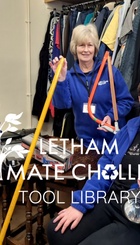
Letham Climate Challenge wish to develop our Furniture Store to create a community tool library. Just like a library for books, you can have access to things you sometimes need or want to use without spending lots of money and without having to find space for it in your home. Examples include tools for DIY projects or sewing machine; pressure washer, carpet cleaner, camping equipment, specialist cookware or even an electric bike.
We currently sell second hand furniture and household electricals PAT tested by our volunteers. This project would allow us to extend the scope of our organisation by reducing our communities spending while contributing to our carbon net zero targets. By using our tool library, members would save money, save space, and save the planet.
We are currently in a cost-of-living crisis, and are based in an economically deprived area. Tool libraries across the UK are known to save their uses an average of £300 per user per year. We might all have a small basic tool kit in our homes, but when it comes to larger, more expensive items many people cannot justify the expense.
Home-owners with limited resources could then maintain their homes, which helps to provide for housing security. We would like to encourage more of our customers to develop their DIY skills so that furniture can be upcycled to increase their longevity. As an organisation we pride ourselves on encouraging sustainable living and sustainable practices. With the production of a tool library, we can provide our community with access to hundreds of useful items for free. This will encourage our community to try out those upcycling projects, to mend their existing items rather than buying new.
By sharing resources, we are making our community stronger and more resilient. By borrowing instead of buying we are reducing production and consumption of the same, infrequently used items. Our community would be reducing their carbon footprint and helping to transition towards a circular economy. By not buying new items, we reduce the amount of resources extracted from the Earth, save energy from production and reduce the amount of eventual waste.
We intend to track the amount of items borrowed to track the collective carbon saved by our community. We are promoting the importance of reducing, reusing, and recycling among people in Perth, demonstrating how small actions can address the climate emergency.
We have the space, but now require the tools and equipment to build an inventory. We will seek as much second-hand as possible, but many items will need to be purchased from new. We also need to create an online inventory website to list items available, and allow registration for membership and members to book out items. We expect the tool library to be very popular, so would require a part time member of staff to manage it and itemise all of the items being borrowed and returned.
Crieff Juniors Walking Football
2025-02-04 • No comments • • South Crieff
Crieff Juniors Walking Football Club are looking to increase participation of Walking Football for those living in the South Crieff area and beyond. We are looking to increase our participation by offering free sessions and involve additional age groups. Currently sessions are targeted at 50+ although we have a couple of younger players with additional needs participating. We are also looking to offer female only sessions to increase participation.
We are also hoping to participate in a national league and possibly enter tournaments which are held throughout Scotland.
Regular participation in Walking Football has been shown to offer numerous health benefits, including:
Improved cardiovascular health:
Enhanced mobility and flexibility:
Weight management
Mental health benefits:
In addition to the health benefits, Walking Football offers significant social advantages, such as:
Building social connections:
Encouraging teamwork and cooperation
Inclusive and accessible
The primary objectives of the proposed increase in the Walking Football programme are to:
Increase participation in physical activity among older adults and individuals with limited mobility, females and those with additional learning needs.
Enhance the physical, mental, and social wellbeing of participants through regular engagement in Walking Football.
Foster a sense of community and social connectedness by providing a welcoming and inclusive environment for all participants.
- Raise awareness of the benefits of Walking Football and promote its adoption as a valuable sport for older adults.
The successful implementation of the additional Walking Football sessions will require funding to cover the following key expenses:
Facility rental: Strathearn Community Campus £350
Equipment: Purchasing footballs, bibs, markers £269
League and Tournament Fees £650
In conclusion, the Walking Football programme offers a unique and valuable opportunity to enhance the health and wellbeing of adults in our community. Improve physical fitness, mental health, and social connectedness. We kindly request funding to support the development and expansion of this programme, enabling more individuals to experience the numerous benefits of Walking Football and fostering a healthier, happier community.